Uncategorized
Vanderbilt researchers bring paleoecology into the 21st century
Jul. 7, 2022—By Andy Flick, Evolutionary Studies scientific coordinator Science is an inherently collaborative endeavor. When a respected colleague courteously disagrees with your point of view, it can lead to great new papers, perspectives and collaborations. In that same vein, feedback from editors and reviewers of academic journals is an often-understated driver of new research directions. Assistant...
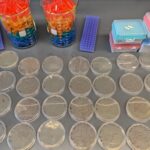
“The Hunger Games: E. coli edition” demonstrates how mutualism and cooperative behavior shape species
May. 20, 2022—Andy Flick, Evolutionary Studies Initiative scientific coordinator Bacteria, not unlike humans, can take up more resources than necessary. When this happens, synthesized byproducts can leak into the environment. This allows the nearby bacteria to evolve cooperative behaviors, such as using the byproducts as nutrients. Cooperation in bacterial communities has also been previously observed with behaviors...

Megan Behringer Faculty Profile
May. 2, 2022—By: Andy Flick, Evolutionary Studies Initiative scientific coordinator Megan Behringer joined Vanderbilt in 2020 and is currently an assistant professor of Biological Sciences with a secondary appointment to Pathology, Microbiology, and Immunology. She serves as the associate director of the Vanderbilt Microbiome Innovation Center and is a member of the Evolutionary Studies Initiative, currently serving...
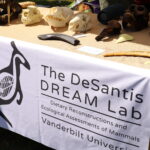
Nashville Earth Day Celebration at Centennial Park
May. 2, 2022—By: Andy Flick, Evolutionary Studies Initiative scientific coordinator The DeSantis DREAM Lab represented the Evolutionary Studies Initiative this past Saturday at the Nashville Earth Day celebration at Centennial Park. The booth was a smashing success by all accounts. Associate professor of Biological Sciences and Earth and Environmental Sciences, Larisa DeSantis and her lab, discussed the...
Medical researchers develop new methodology for molecular mechanisms of disease
Mar. 29, 2022—By Andy Flick, Evolutionary Studies Initiative scientific coordinator Evolutionary Studies Initiative researcher Eric Gamazon and his former postdoctoral researcher, Dan Zhou (now faculty at Zhejiang University), recently published new software and methodology for understanding the molecular basis of disease. They then applied their work to understanding the genetic basis for COVID-19 severity. The study is...
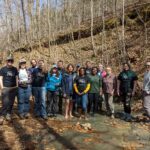
ESI Group Visits Coon Creek Science Center
Mar. 28, 2022—On Saturday, 3/26/22, a handful of members of the Evolutionary Studies Initiative took a field trip to Coon Creek Science Center (CCSC) to dig for fossils. It was a beautiful day where many trainees that have never studied paleontology got to get out and do some field work. Michael Gibson, a faculty at the University...

Graduate student Jacob Steenwyk receives prestigious 2022 Harold M. Weintraub Award
Mar. 23, 2022—Jacob Steenwyk, a sixth-year doctoral student studying biology in the Rokas Lab, is a recipient of the 2022 Harold M. Weintraub Graduate Student Award presented by the Fred Hutchinson Cancer Research Center. Jacob Steenwyk He is the second Vanderbilt student ever to have received this honor, which recognizes outstanding achievement in graduate studies in biological...

Vanderbilt astronomers discover exceedingly rare star
Feb. 11, 2022—By: Andy Flick, scientific coordinator, Evolutionary Studies Initiative A team of astronomers have made the discovery of a lifetime that will help answer burning questions on the evolution of stars. The group is led by Evolutionary Studies Initiative member and Stevenson Professor of Physics and Astronomy, Keivan Stassun. Stassun鈥檚 team generated a new model that...

Fossil records help us understand the present and predict future ecosystems
Nov. 5, 2021—By Miqu茅la Thornton Due to a multitude of human-driven impacts, the Earth is experiencing a聽biodiversity crisis. It has been referred to as the聽Sixth Mass Extinction, and scientists are examining similar events in the planet鈥檚 geological past looking for clues in ancient ecosystems to help us solve present-day issues. Current events have produced dramatic changes in...
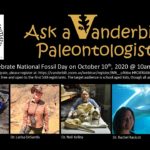
Vanderbilt National Fossil Day Event
Oct. 5, 2020—Vanderbilt National Fossil Day Event (https://www.youtube.com/watch?v=0LLoS5-2WB8) Note: This is a past event. You can watch the event at YouTube. Description: Vanderbilt鈥檚 Evolutionary Studies Initiative invites you to attend a virtual webinar. During the webinar, each paleontologists will discuss the fantastic creatures they study and how they became fascinated by fossils. The focus of the webinar...