
MASI Lab teams up with EnvoyAI to develop segmentation algorithms
The is collaborating on the development of deep learning algorithms for abdomen segmentation that leverage artificial intelligence to better understand and diagnose disease.
The MASI lab, affiliated with the Vanderbilt Institute for Surgery and Engineering, is working with a team from , which aims to simplify access to new AI algorithms by providing direct access to physicians, including radiologists, for integration into existing workflows. The MASI team has, in effect, turned biomarkers it has generated from features of radiology studies into an application that can be utilized for prospective clinical research.
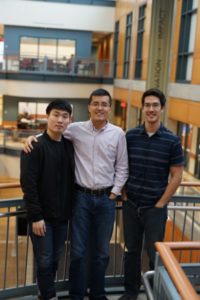
鈥淭he performance of our methods are better than traditional methods on accuracy and computational time,鈥� said Yuankai Huo, a Vanderbilt PhD candidate in electrical engineering and member of the MASI lab.
MASI (Medical-imaging Analysis and Statistical Interpretation), which is under the direction of Associate Professor Bennett Landman, is developing two algorithms with EnvoyAI. The first can produce 3D spleen segmentation from clinically acquired CT scans on both healthy people and symptomatic patients.
鈥淭his splenic biomarker is important because spleen size, morphology, and signal characteristics may be indicative of an underlying systemic disease processes,鈥� said Steven Rothenberg, MD, chief medical officer at EnvoyAI. 鈥淐urrently, there is no standardized way to compare splenic size across patients and normative databases are very limited at the moment.鈥�

Dr. Rothenberg demonstrated the software at the Radiological Society of North America (RSNA) 2017 annual meeting.
The EnvoyAI platform 鈥渉elps researchers and companies deploy their algorithms locally or in the cloud, while providing a distribution network for validation and commercialization,鈥� he said.
The second algorithm is a multi-organ segmentation pipeline, which can provide simultaneous liver, kidney, spleen and stomach segmentation on clinically acquired CT scans.
鈥淭he researchers at MASI have successfully turned their research biomarker into an application that can be used now for research purposes anywhere they grant permission,鈥� Dr. Rothenberg said.
EnvoyAI, based in Cambridge, MA, launched its EnvoyAI Exchange in November. The cloud-based distribution platform allows access to algorithms without the need for underlying code or training data. The MASI lab is among several EnvoyAI collaborators that include AI startups as well as academic centers.