
VISE on the Virtual Road: 2021 MICCAI conference
Members of five labs affiliated with the Vanderbilt Institute for Surgery and Engineering took part in the 24th annual International Conference on Medial Image Computing and Computer Assisted Intervention, sharing their work with like-minded scientists from around the world.
The conference brings together leading biomedical scientists, clinicians, and engineers who focus on medical imaging and computer assisted intervention. The three-day virtual conference included workshops, oral presentations, and poster sessions. The labs and presenters were:
Medical-image Analysis and Statistical Interpretation Lab (MASI)
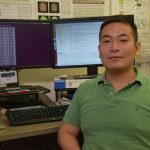 Postdoctoral scholar, Shunxing Bao, proposed a novel multi-channel high-resolution image synthesis approach, called pixN2N-HD, to tackle any possible combinations of missing stain scenarios in Multiplexed Immunofluorescence Imaging (MxIF).
He is lead author on the paper, 鈥淩andom Multi-Channel Image Synthesis for Multiplexed Immunofluorescence Imaging鈥�.
鈥淭o our knowledge, this is聽the first comprehensive study of dealing with the missing stain challenge in MxIF via deep synthetic learning,鈥� said Bao.
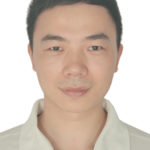 Graduate student Riqiang Gao, first author on the paper, 鈥淟ung Cancer Risk Estimation with Incomplete Data: A Joint Missing Imputation Perspective鈥� presented during one of the oral sessions.
鈥淲e propose a new adversarial training-based model that imputes one modality combining the conditional knowledge from another modality and achieve state-of-the-art performance in downstream cancer prediction,鈥�, said Gao, who also won a MICCCAI 2021 Travel Award.
 Graduate student Yucheng Tang presented the paper titled 鈥淧ancreas CT Segmentation by Predictive Phenotyping.鈥�
鈥淲e demonstrate a predictive task to encourage image embedding to the phenotyping cluster with similar patient outcomes for pancreas segmentation of diabetes patients,鈥� Tang said.
鈥淭he integrated imaging phenotyping method could encourage solutions that better respect anatomical variability, especially associated with disease progression or comorbidities.鈥�
the biomedical data Representational and Learning laB (HRLB)
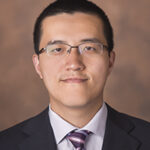 Assistant Professor of Electrical and Computer Engineering Yuankai Huo was a session chair of the Machine Learning in Medical Imaging workshop.
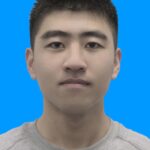 From his group, graduate student Quan Liu presented and proposed a simple triplet representation learning (SimTriplet) approach on pathological images. The group鈥檚 paper, on which Liu is first author, is titled 鈥淪imTriplet: Simple Triplet Representation Learning with a Single GPU.鈥�
鈥淭he proposed SimTriplet method takes advantage of the multi-view nature of medical images beyond self-augmentation and maximizes both intra-sample and inter-sample similarities via triplets from positive pairs, without using negative samples,鈥� Liu said.
Neuroimaging and Brain Dynamics Lab (NEURDY
The group鈥檚 recent work proposes a multi-task learning framework to estimate the physiological time-series signals directly from fMRI data to aid many datasets that lack these in scan measurements.
 鈥淢easurements of breathing and heart rate gathered during fMRI scans are important for improving data quality and enabling new studies of brain physiology, said graduate student Roza Bayrak.
She is the first author of the paper, 鈥淔rom Brain to Body: Learning Low-Frequency Respiration and Cardiac Signals from fMRI Dynamics鈥� and presented during an oral session.
Medical Image Processing Lab (MIP)
 Jianing Wang鈥檚 group proposed an atlas-based method to segment the intracochlear anatomy in the post-implantation CT images of cochlear implant recipients.
鈥淥ur method produces results that are comparable to the current state of the art (SOTA) and requires only a fraction of the time needed by the SOTA, which is important for end-user acceptance,鈥� Wang said.
The VISE alumna presented the group鈥檚 paper titled, 鈥淎tlas-based Segmentation of Intracochlear Anatomy in Metal Artifact Affected CT Images of the Ear with Co-trained Deep Neural Networks.鈥�
Medical Image Computing Lab (MedICL)
 Graduate student Dewei Hu and his team proposed a local intensity fusion encoder (LIFE), a self-supervised method to segment 3D retinal vasculature from OCT angiography. LIFE requires neither manual delineation nor multiple acquisition devices.
鈥淭o our best knowledge, it is the first label-free learning method with quantitative validation of 3D OCT-A vessel segmentation,鈥� said Hu.
Hu is first author of the paper, 鈥淟IFE: A Generalizable Autodidactic Pipeline for 3D OCT-A Vessel Segmentation鈥� and presented during the conference.
The Vanderbilt Institute for Surgery and Engineering (VISE)聽is an interdisciplinary, trans-institutional structure designed to facilitate interactions and exchanges between engineers and physicians. Its goal is to become the premier institute for the training of the next generation of surgeons, engineers, and computer scientists capable of working symbiotically on new solutions to complex interventional problems, ultimately resulting in improved patient care.